Posts

Showing posts with the label fermat

Memories of Taiwan: Third eye blind

Image
The sun has set behind the Kaohsiung skyline as our bus rattles along in the congested rush-hour traffic. I lie back against the head-rest, feeling the vibration on my scalp through the velour, and try to doze. Every now and again a jolt throws me back into the real world and I see flashes: flashes of the faux wood-panelled interior of our vehicle, the slumped, silent silhouettes of my fellow Chen Pan Ling practitioners, chaos passing in every direction, the smoky-red stain on the horizon and the neon glow of the pea-soup sky. We’re travelling from the Fo Guang Shan monastery into the city centre for our respective appointments with blind masseurs/masseuses. “Go on!” James had said to me in 2009. “Do it. You’ll feel like a new man.” But for whatever reason I declined – a decision I’d come to regret deeply. In fact, the moment I saw them arriving at the Kingship Hotel (each on the back of a scooter) and being escorted in through the foyer to the elevator (aided by the directions ...
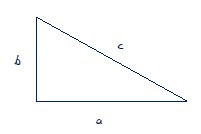
Fermat’s last theorem: a proof for right-angled triangles

Image
Introduction Fermat's last theorem states that no three positive integers a, b, and c can satisfy the equation: a n + b n = c n where a, b and c are real, whole integers and n > 2. The purpose of this paper is to prove Fermat’s last theorem in relation to right-angled triangles. The proof shall be by way of contradiction using algebra and geometry. I shall leave to another day whether it is possible to prove the theorem in relation to any other triangles, or indeed any other non-triangle values. Pythagoras’ theorem: the starting point We know from Pythagoras’ theorem that: c 2 = a 2 + b 2 Pythagoras’ theorem can be illustrated geometrically in the adjacent manner. A square is made on each length of the triangle. The square on the hypotenuse (c) is equal in area to the sum of the area of the squares on the other sides (a and b). But what if we decided to build a cube out of each of those squares? Would the volume of cube c be equal to the sum of the vol...